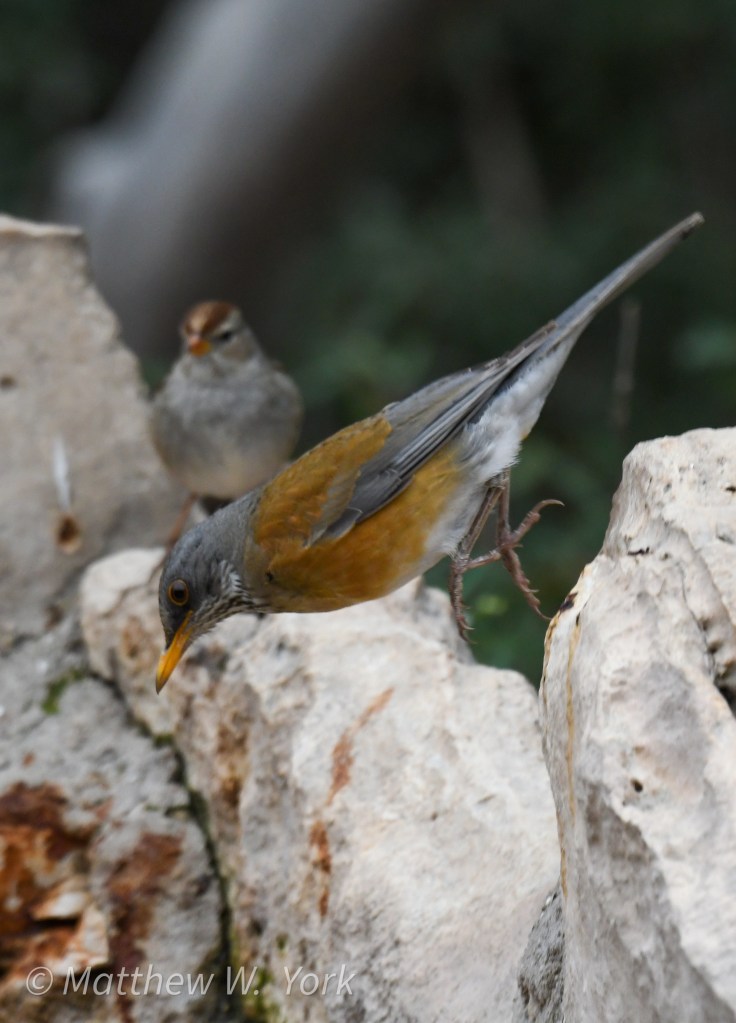
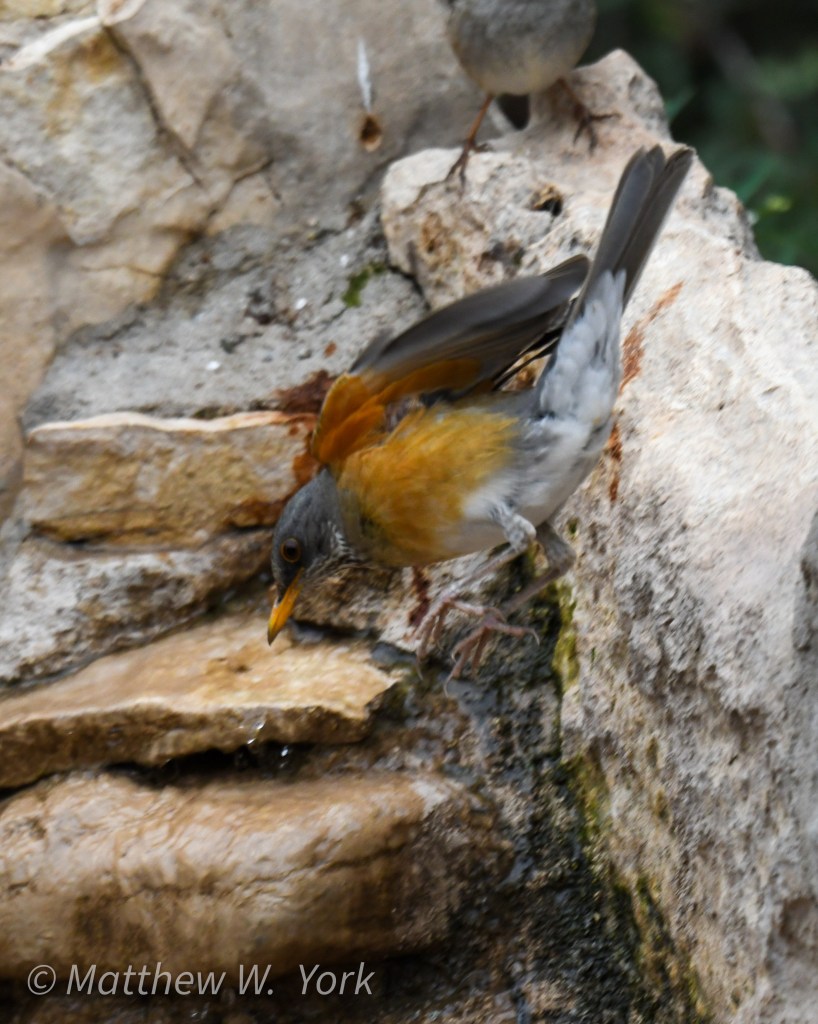
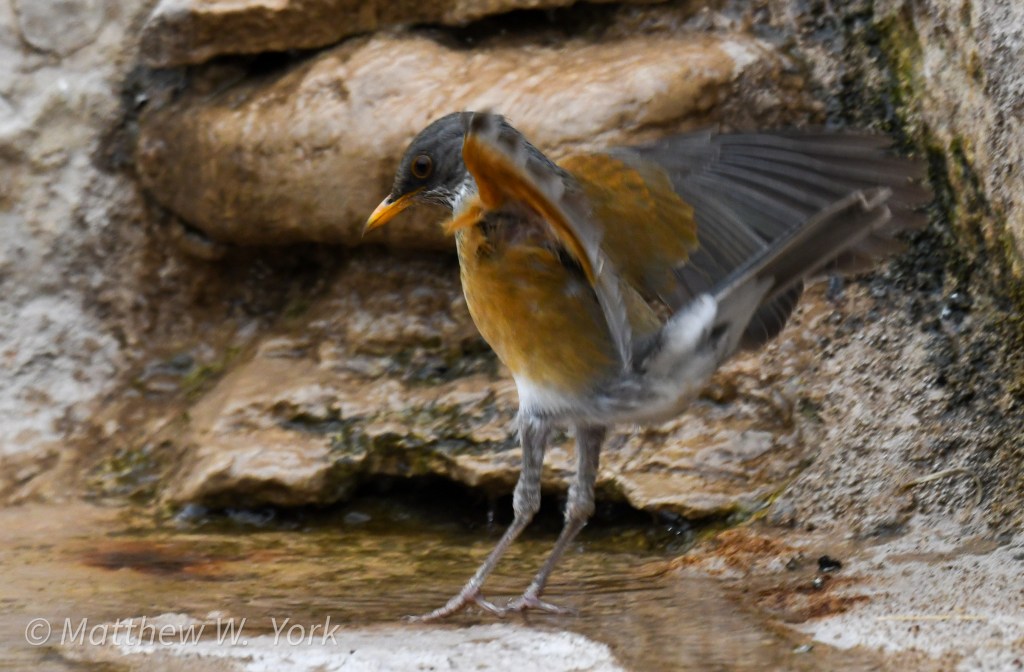
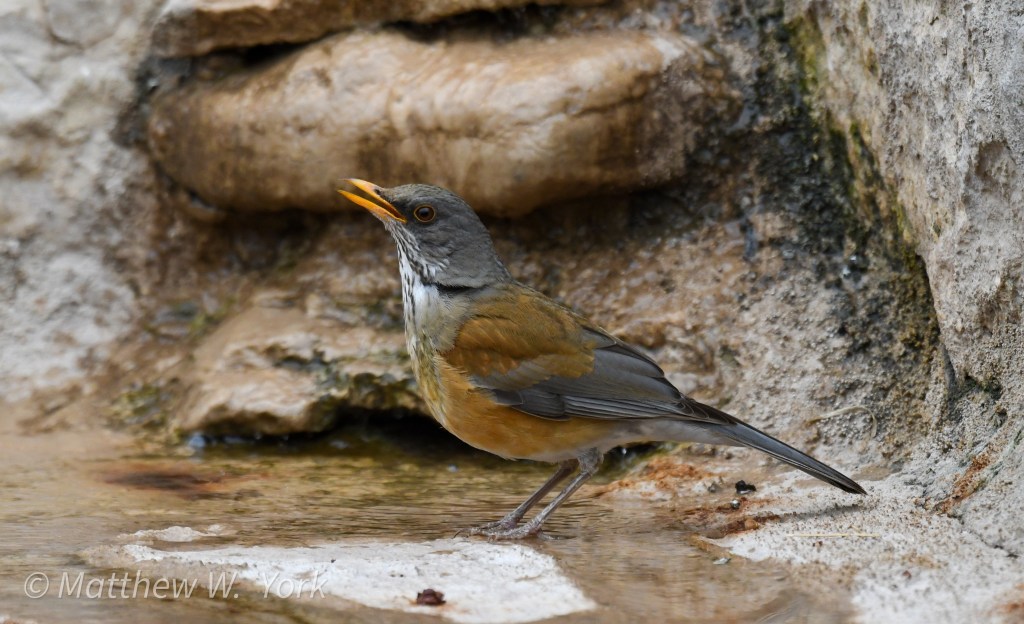
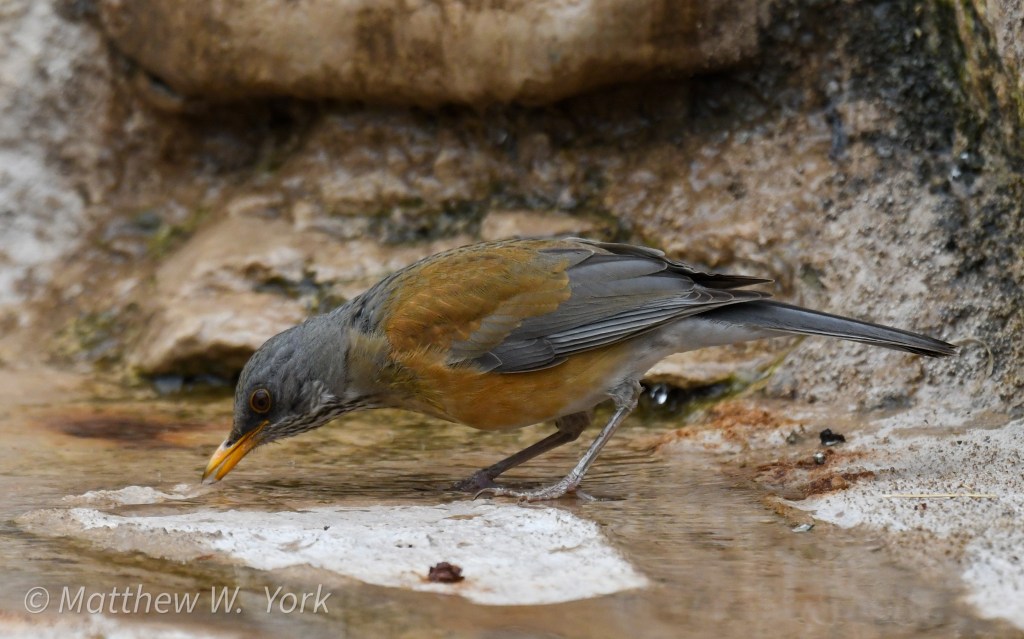
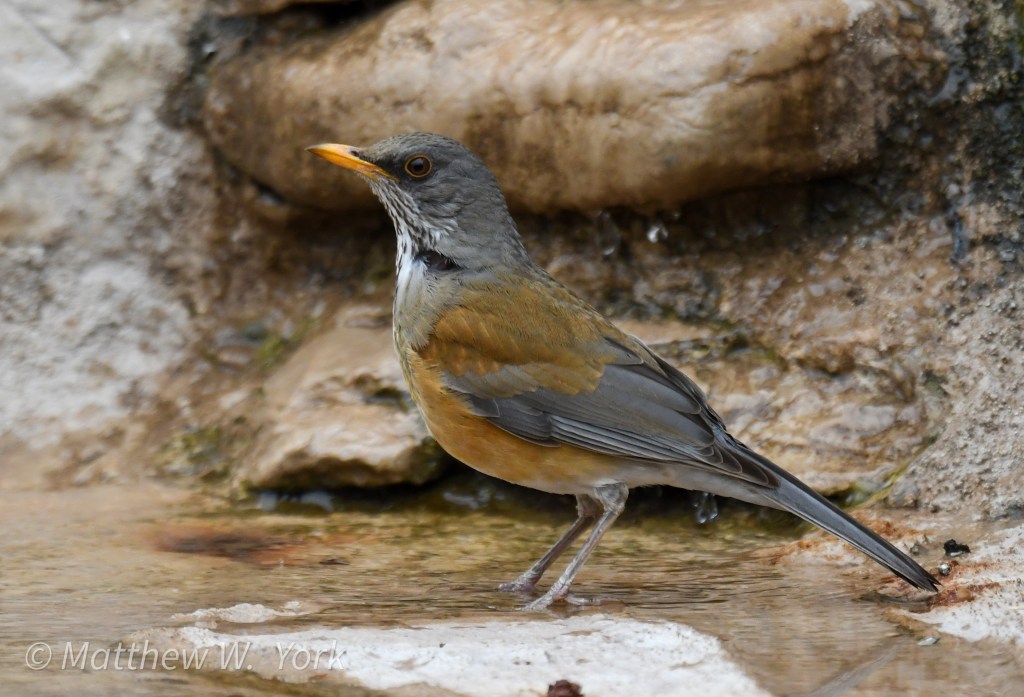
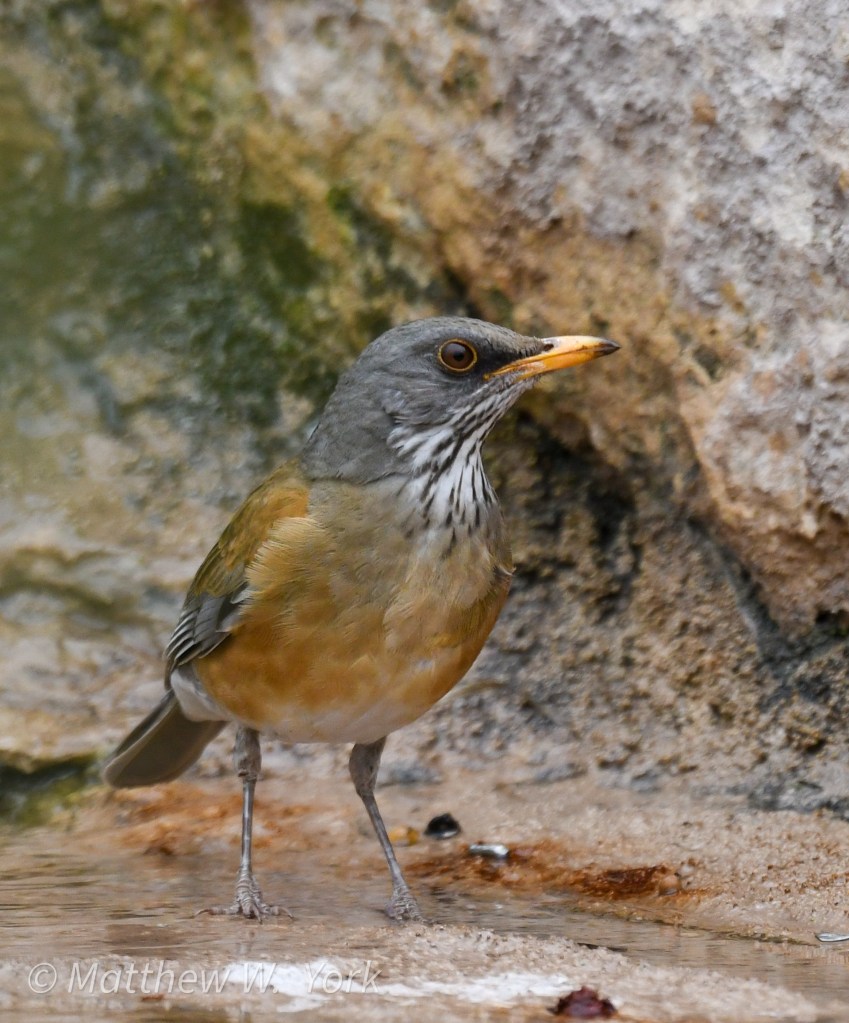
(Turdus rufopalliatus)
14 February 2025
South Llano River State Park, Kimble County, Texas, USA
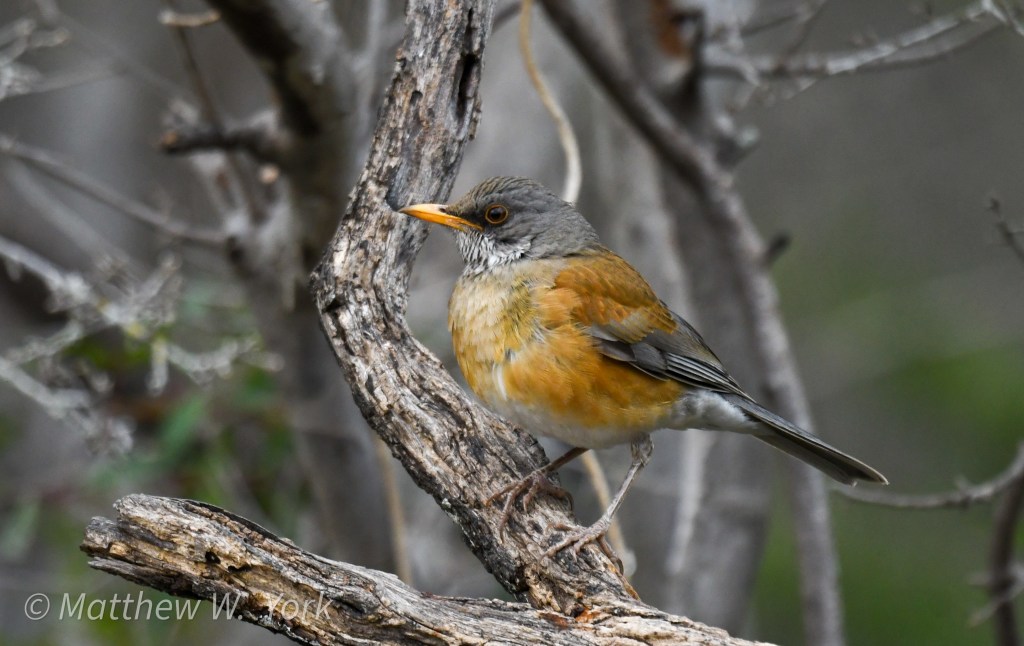
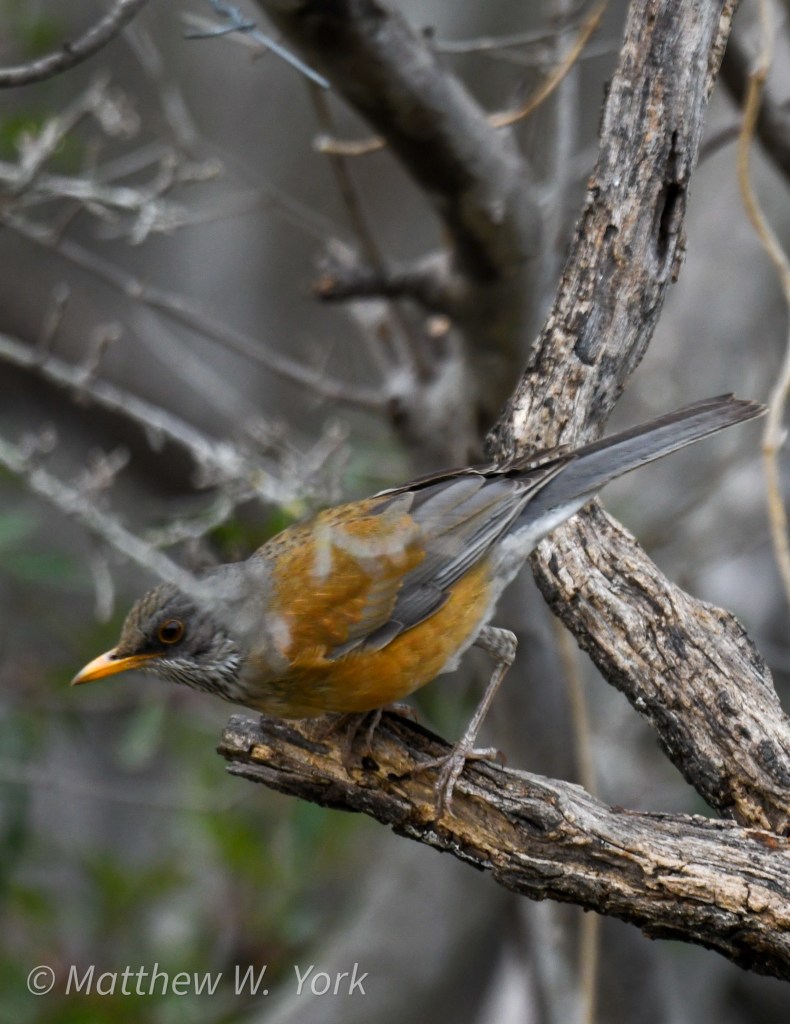
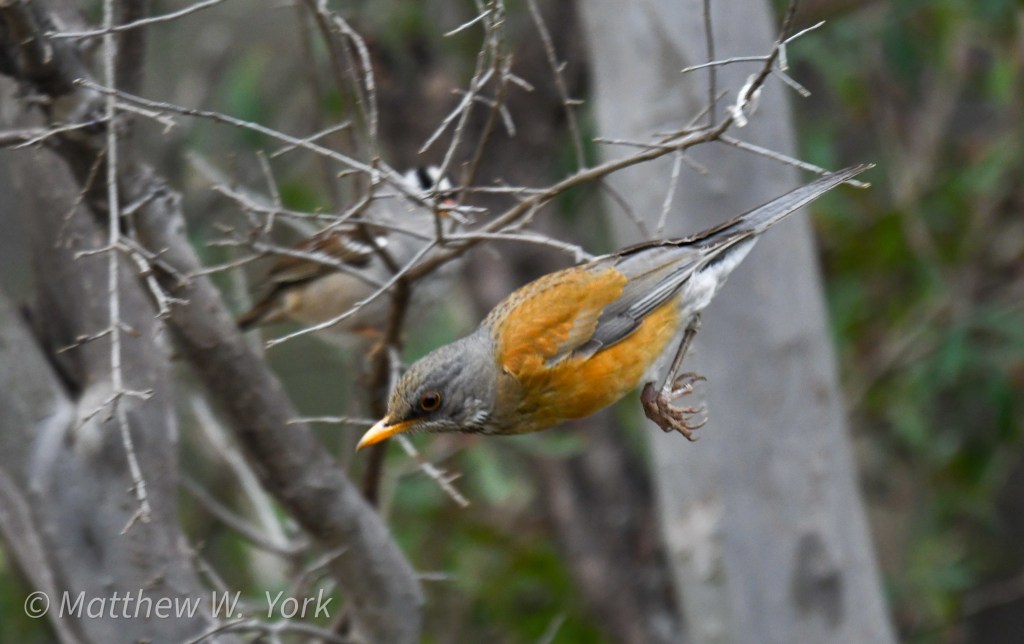
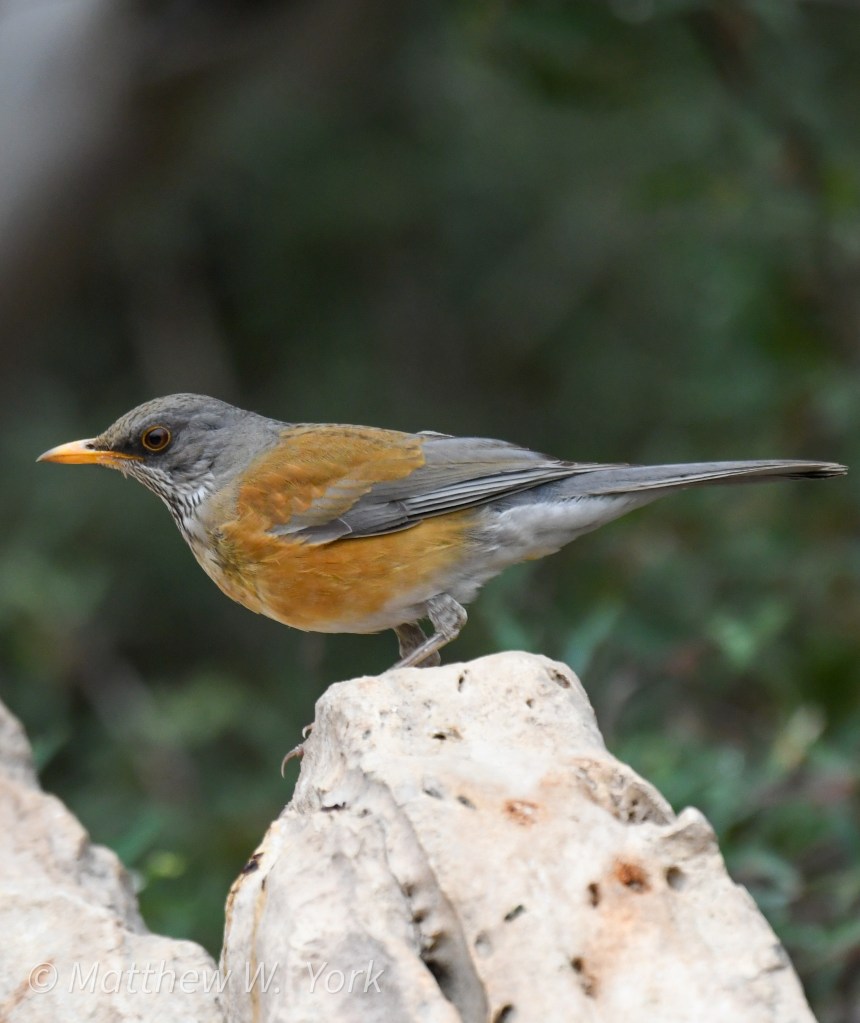
“Out beyond ideas of wrongdoing and rightdoing there is a field. I'll meet you there." – Rumi
(Turdus rufopalliatus)
14 February 2025
South Llano River State Park, Kimble County, Texas, USA
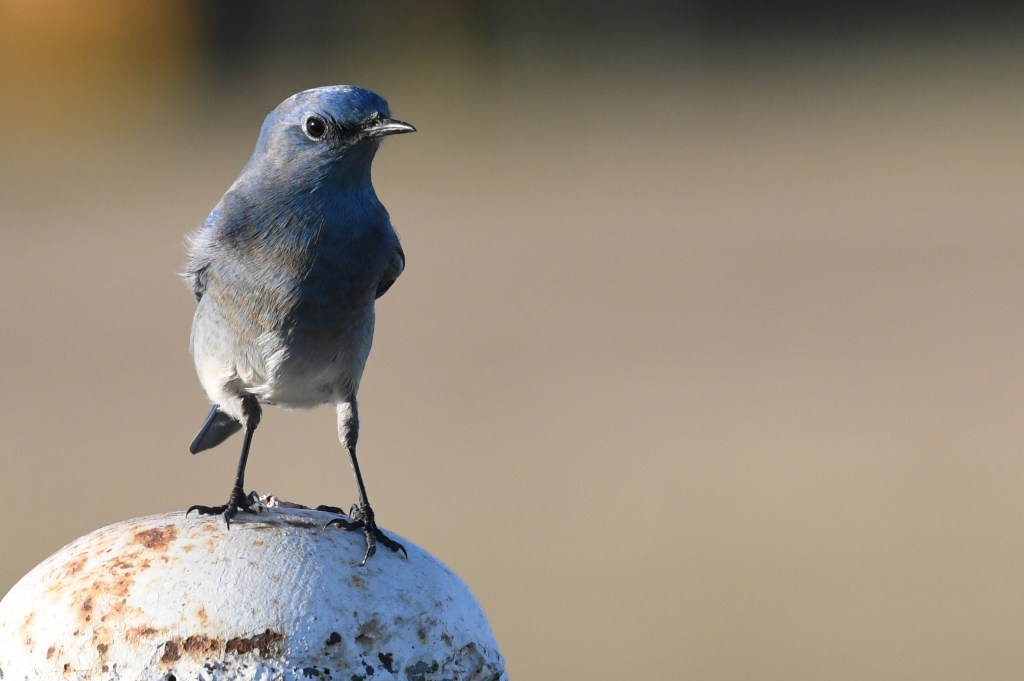
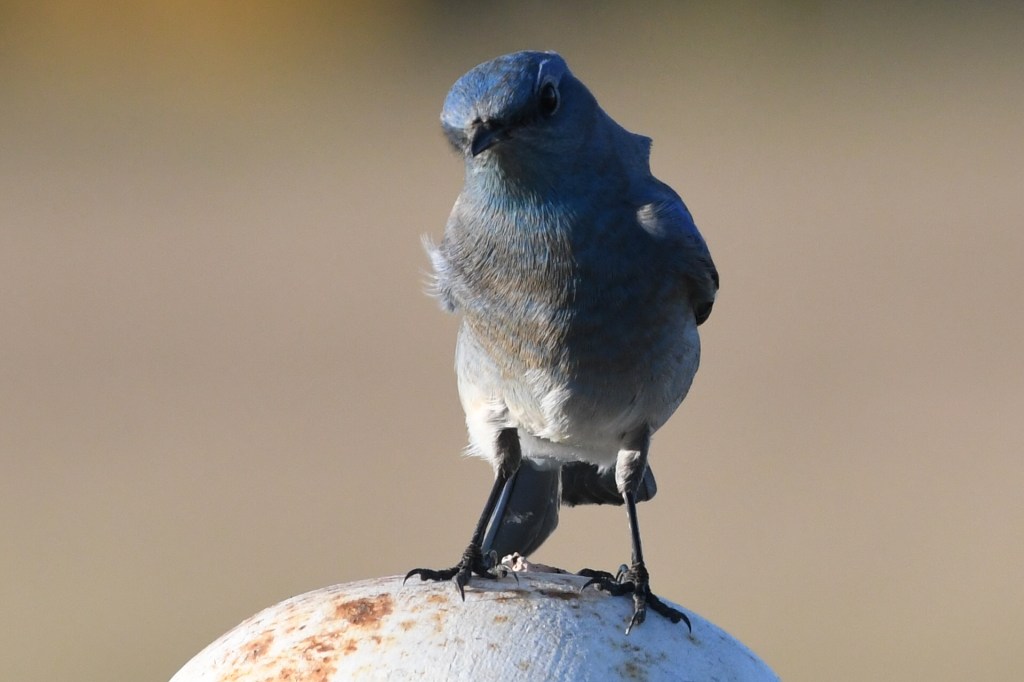
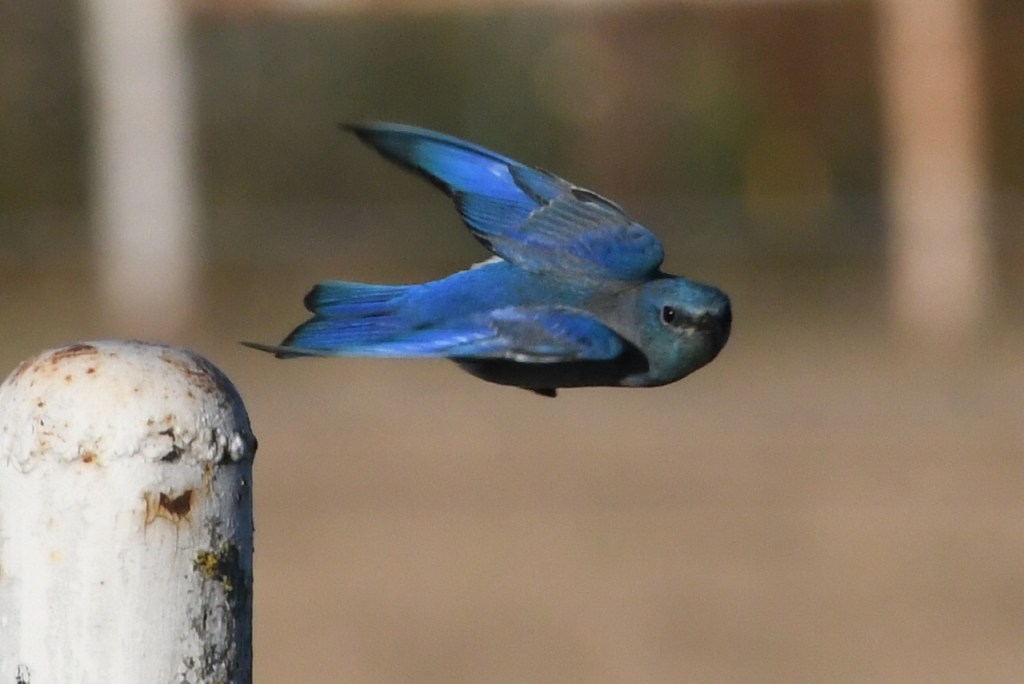
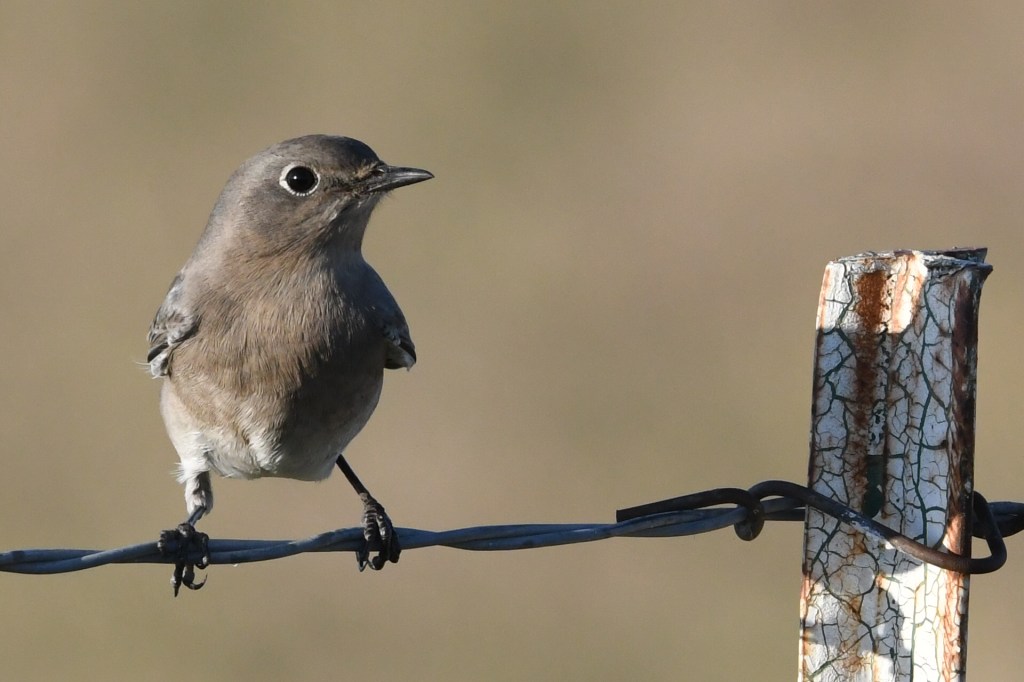
If I had begun any portion of the oral defense of my graduate work with “Well, I heard that (insert conjecture, rumor, hearsay, myth, conspiracy theory, latest youtube prophet)…” I would have been shot down with no hesitation, metaphorically speaking.
I was greeting the morning yesterday at a large reservoir in my county of residence, in an effort to monitor the well-being of a young Brown Pelican that has found it’s way far inland of the coast. Kids.
While in the almost-mud approaching the cattails I heard something. Right? Only once. I was going to attempt an audio recording if it vocalized again.
Silence.
“Well I heard…”
I hear more in the Silence; more so than when it’s noisy. When the wind died down, I heard. Heard movement in the shallow shadows.
Birds, or any wildlife, are not obligated to show themselves to us. Whether for photo, or easy observation. They are not our court jesters.
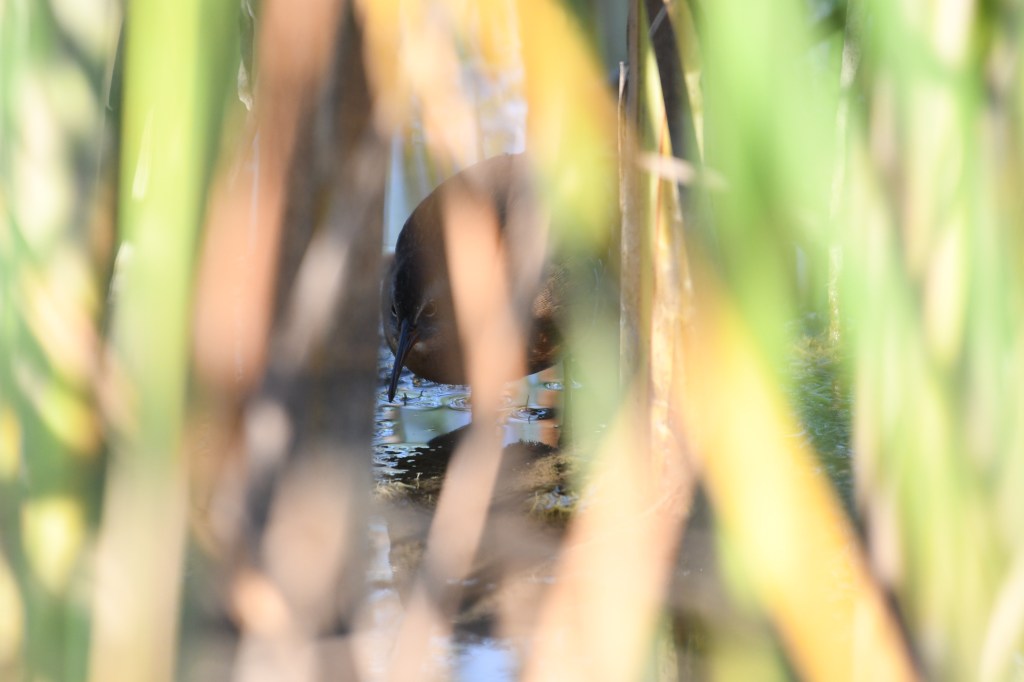
“They said I dance now at every chance and honky tonks. For drinks and tips.” Mr Bojangles, Jerry Jeff Walker.
They are not minstrels. They owe us nothing, … quite the opposite.
So, in my walk.. it is up to the rail.
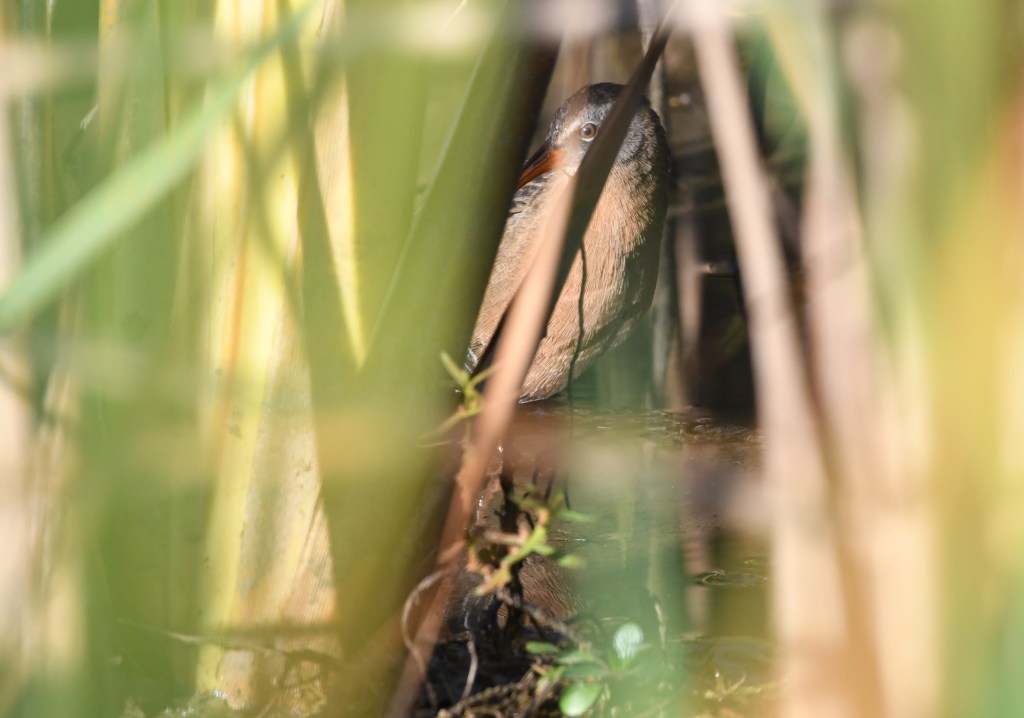
With a rising Sun at my back, this fellow Earth-being and more recent traveler than I, gave me a minute’s moment of opportunity.
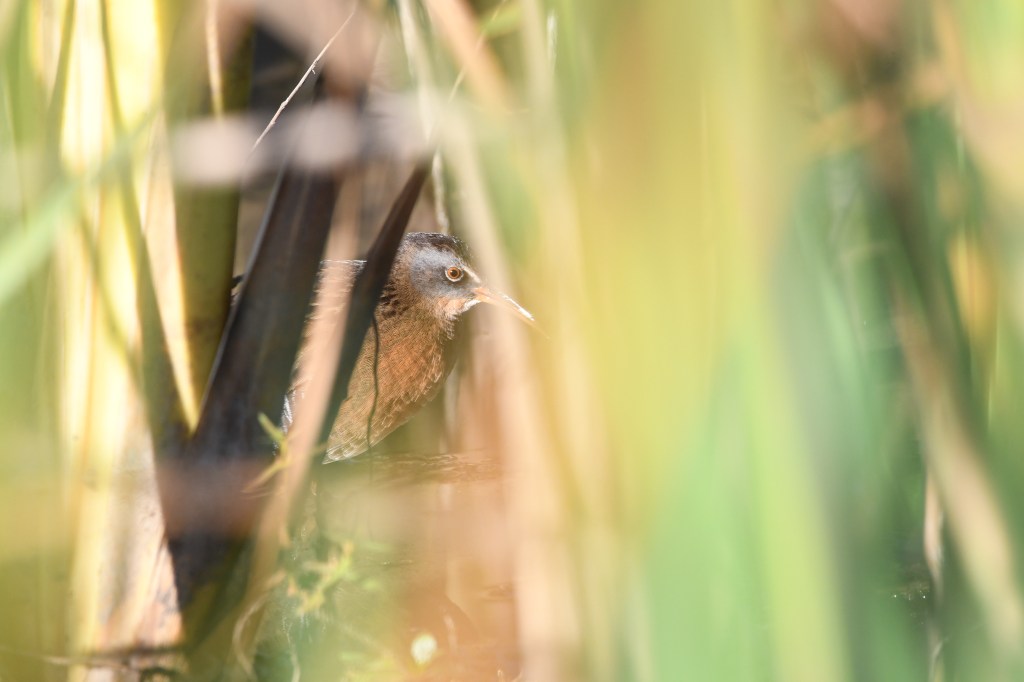
When I have good days, I try to store its memory in my back pocket. To recall it, when experiencing bad.
When a secretive species give me a semi-precious moment of opportunity and observation…
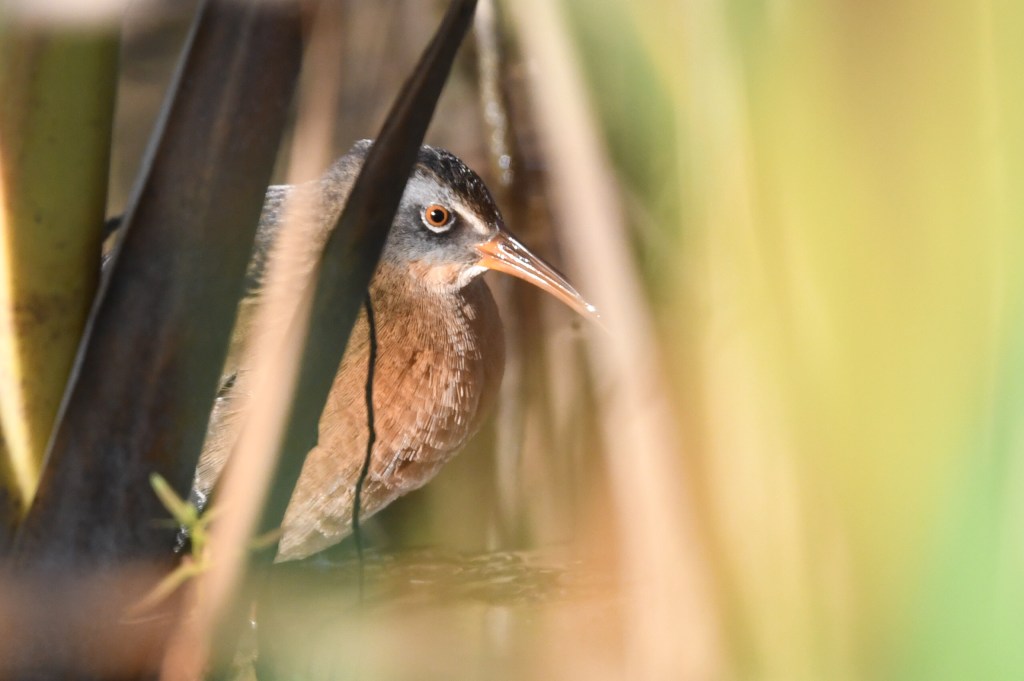
I take it with me for all the days it does not afford me such indulgences, and there are many.
For those mornings where I never saw, never photographed, never was entertained with dance and foolery; those mornings where I just heard, I can walk on …
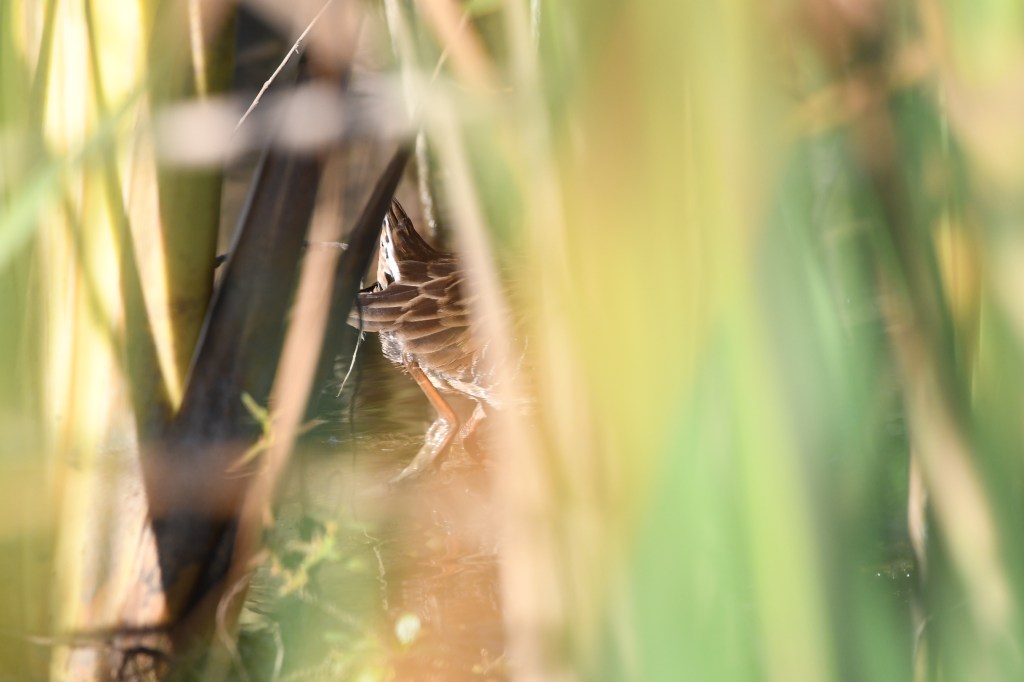
… with equal satisfaction.
And reverence.
And respect.
“Who are you really, [W]anderer?”—
and the answer you have to give
no matter how dark and cold
the world around you is:
“Maybe I’m a king.” – from A Story That Could Be True, William Stafford
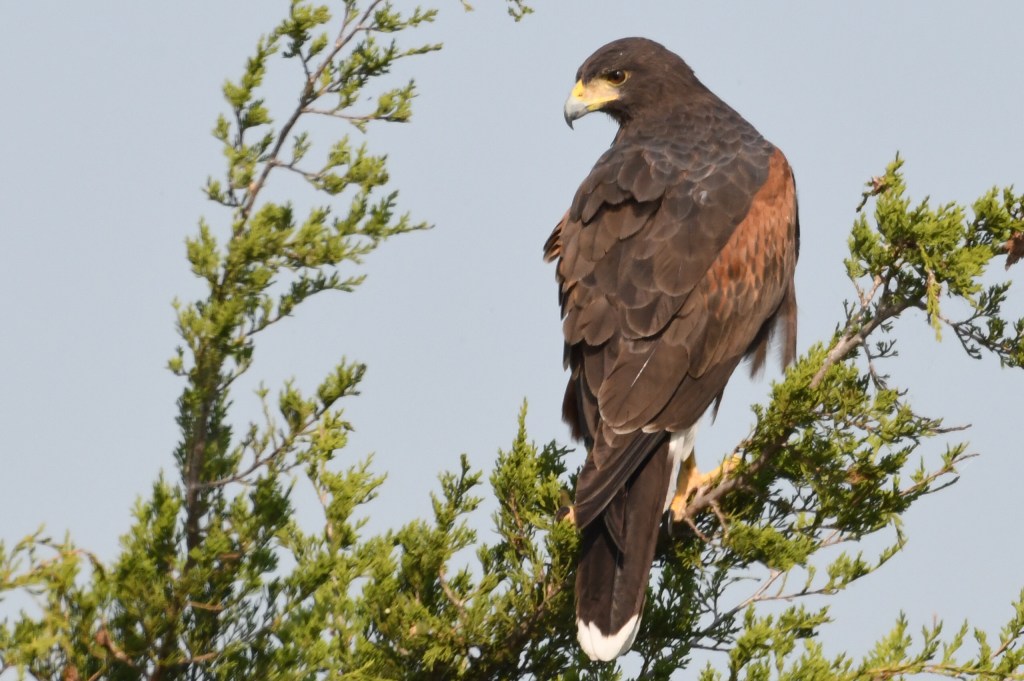
Harris’s Hawk, also known as Bay-winged Hawk, is a handsome raptor of the southwestern United States down to South America. In Texas, this species is resident in southern parts of the state, as well as localized areas in the Permian Basin and the Rio Grande corridor of far west Texas.
None of which is McLennan County. This bird is a post-breeding vagrant.
A wanderer.
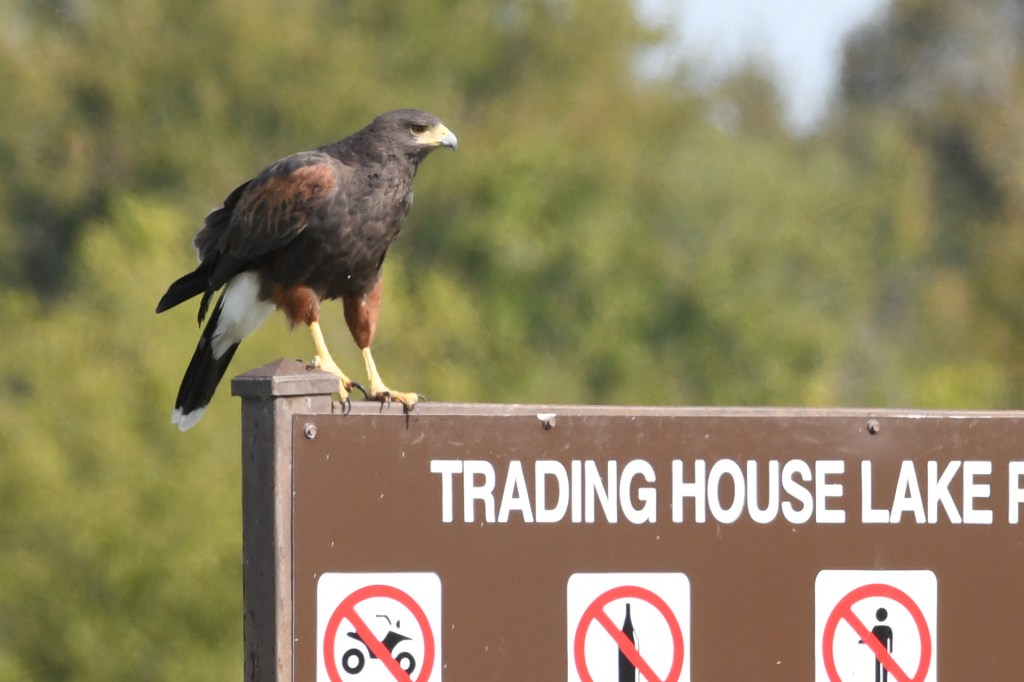
This individual near-Buteo was first discovered at this location on 19 September 2020.
Despite other competing raptor species in the area, this regal being remains; atleast at the time of this posting.
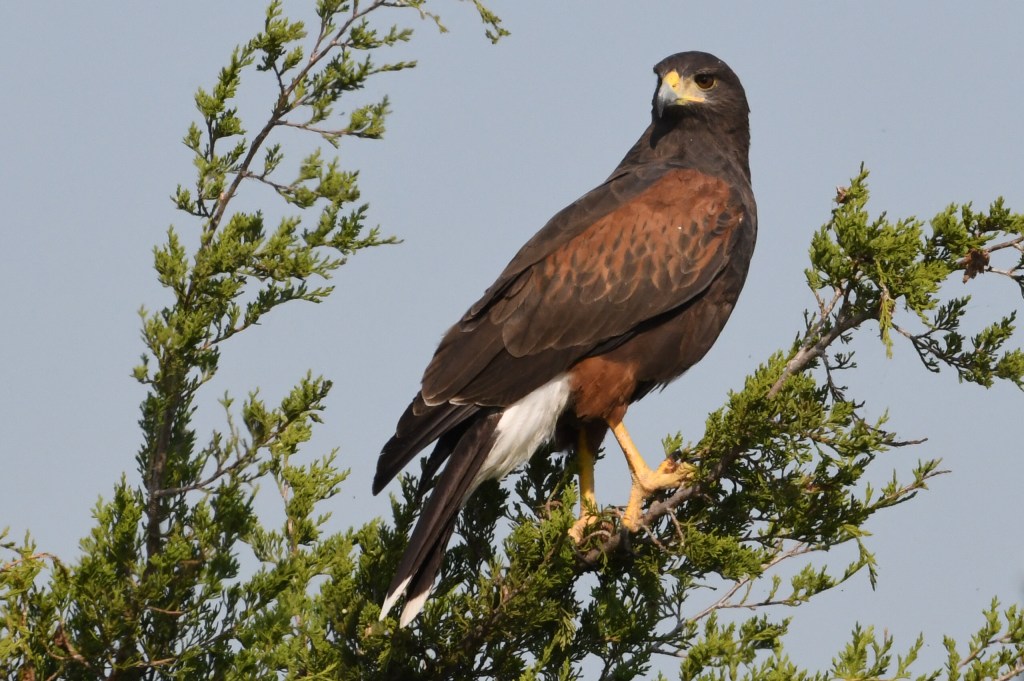
Whether it stays through the winter, wanders in, or wanders out; I was thankful to enjoy moments of its morning hunting routine at an allowed distance on this Sunday.
Good enough for me.
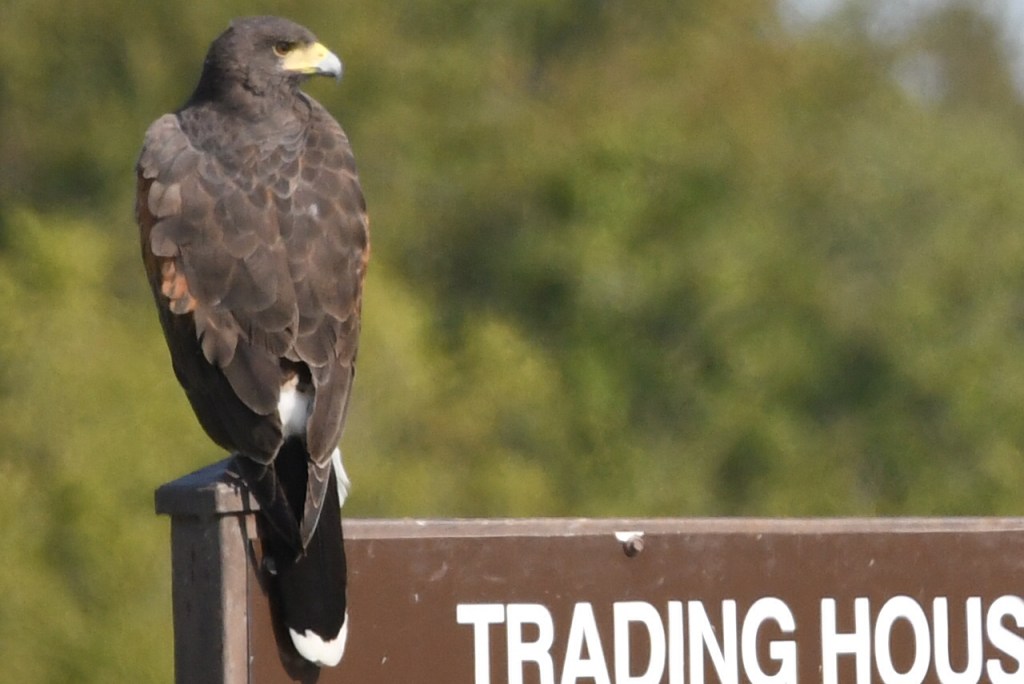
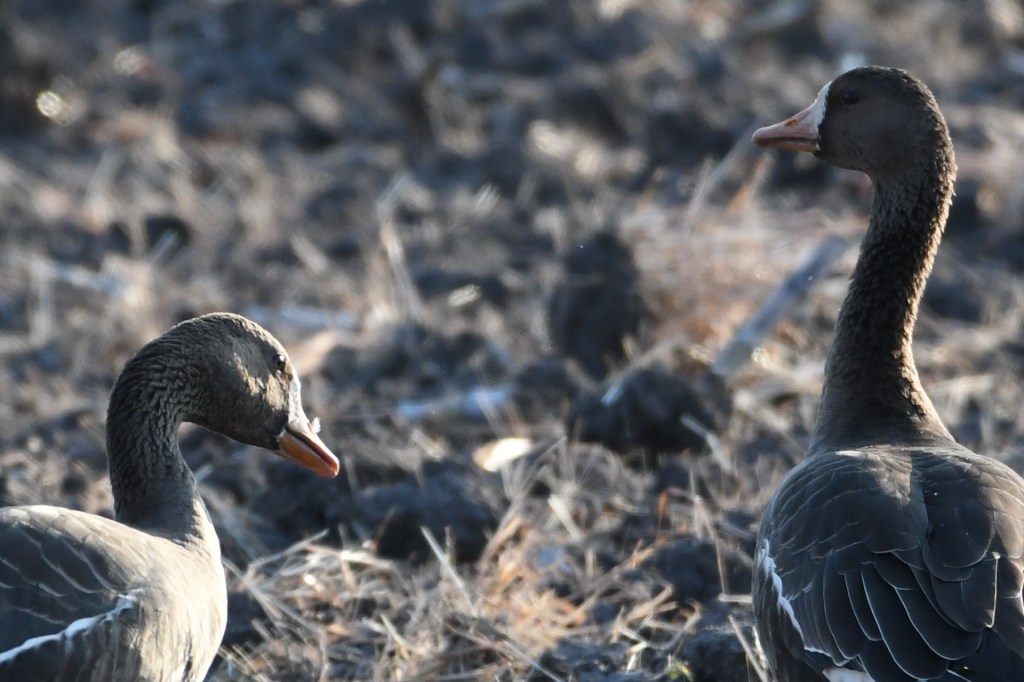
A pleasant happening, if a good bit early, in the cane breaks of a plowed, fallow field at dawn. Two adults (pictured), and one juvenile. How far will they be going and winter residing?
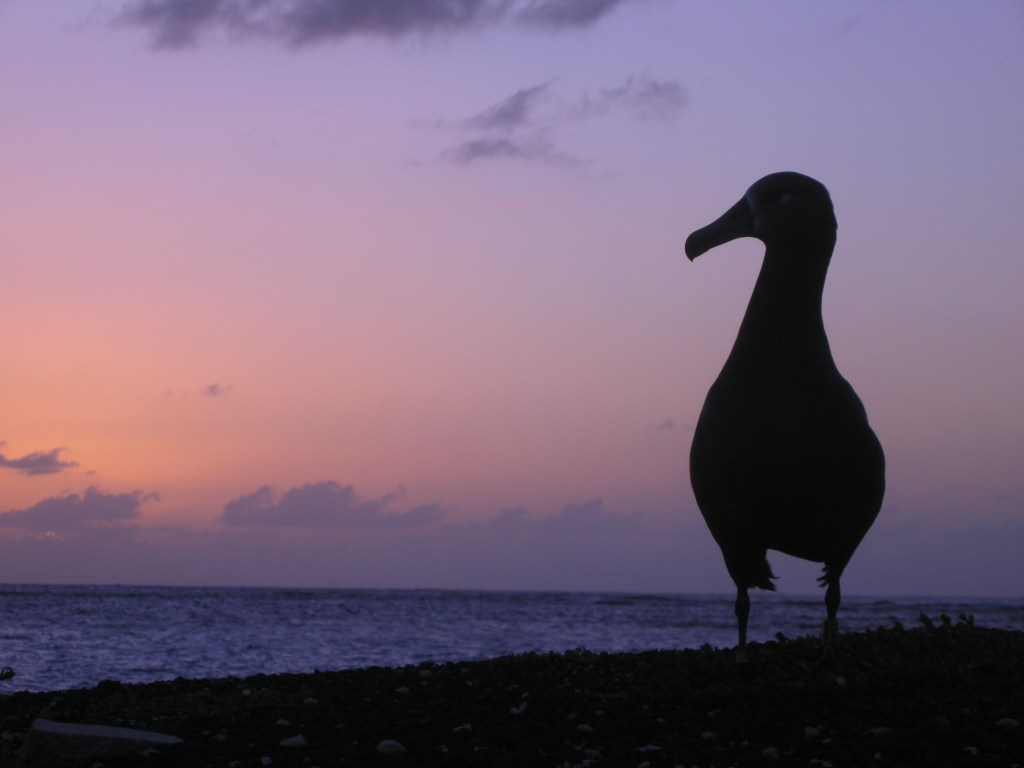
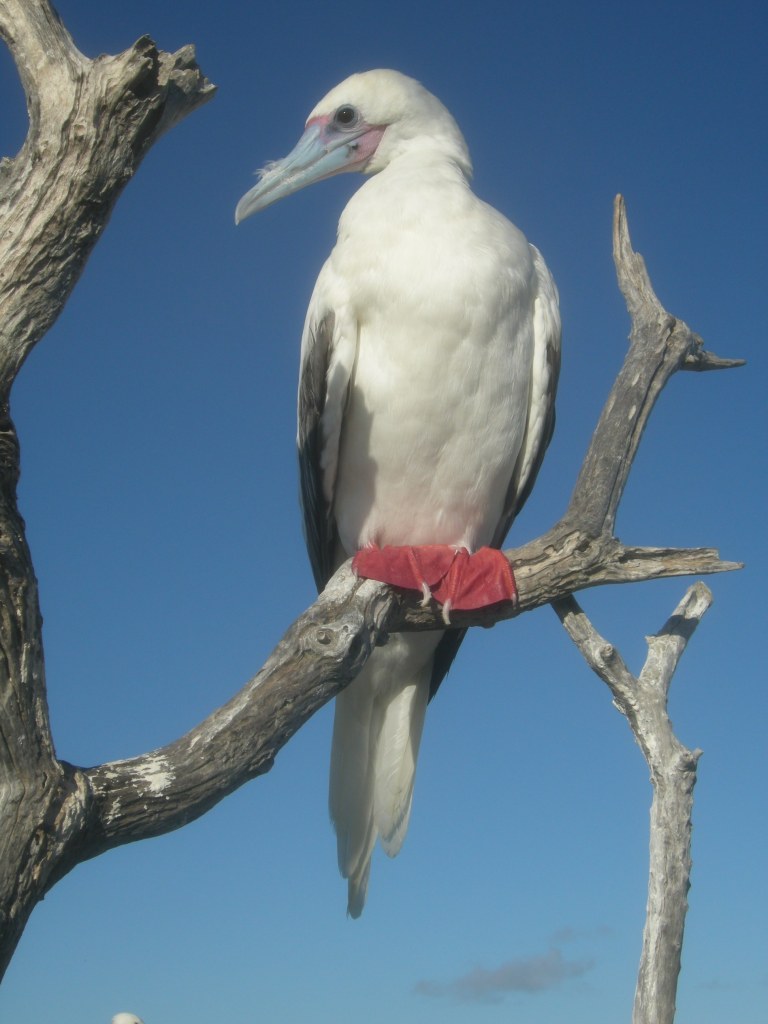
For survival. Twice a calendar year. We are never the only ones.
I had the pleasure of scoping a species I don’t get to see too often. They were somewhat distant, and mostly backlit. Birds are not obligated to present us with good photo opportunities. They are not court jesters.
However, on the first of the two days, one of them did fly over the dusty road giving me a moment of sun at my back, though still a bit far away.
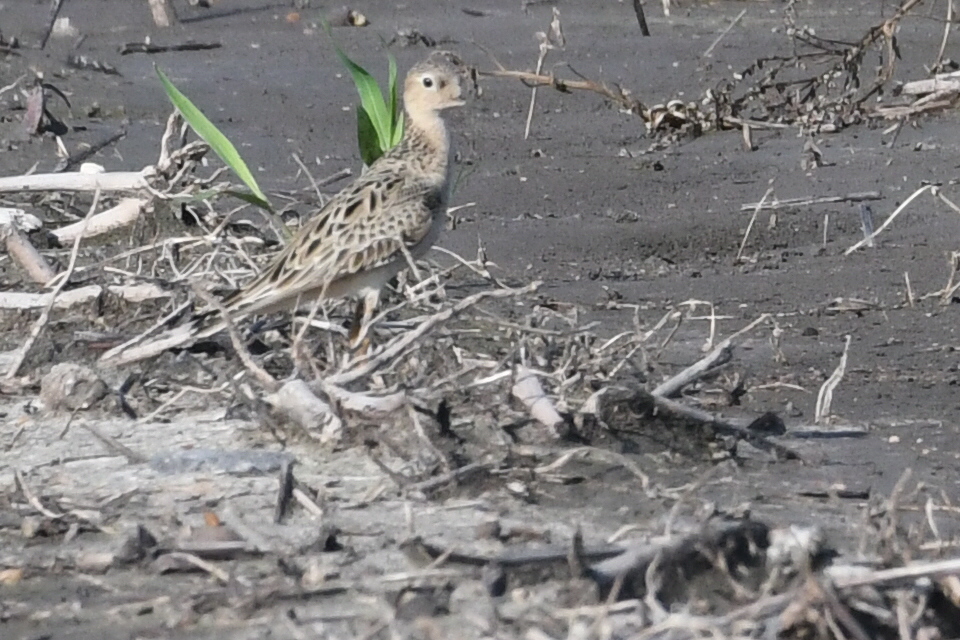
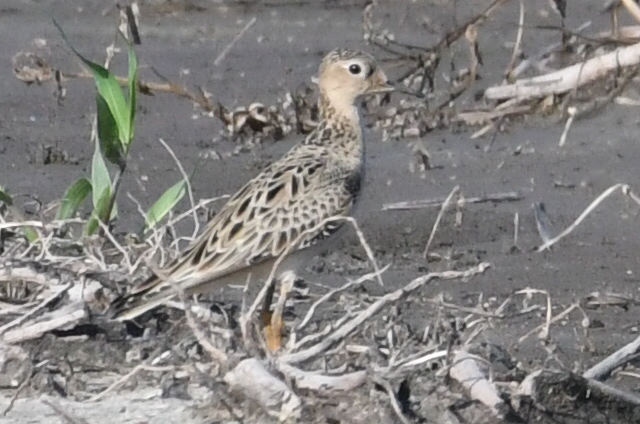
Considered a “Near Threatened” species by the International Union for Conservation of Nature (IUCN), large numbers of Buff-breasted Sandpipers were killed in the late 1800s and early 1900s by commercial hunters in the central United States. The passing of the Migratory Bird Treaty Act (MBTA) of 1918 eventually eliminated market hunting of the species in North America.
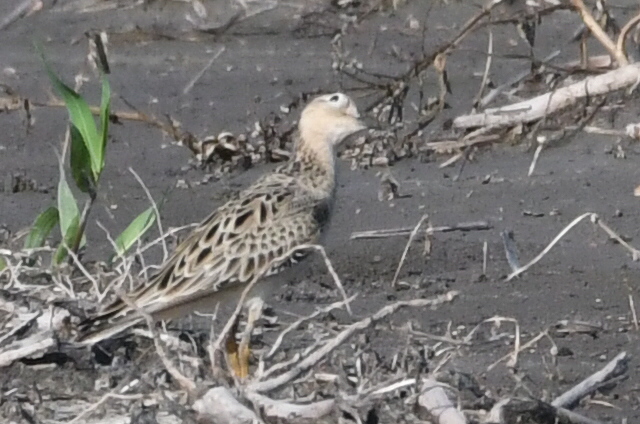
As you can see (maybe) see with these photos, Buff-breasted Sandpipers make extensive use of agricultural fields during migration. They also do so in their over-wintering range in South America. Okay, I will include another photo below:
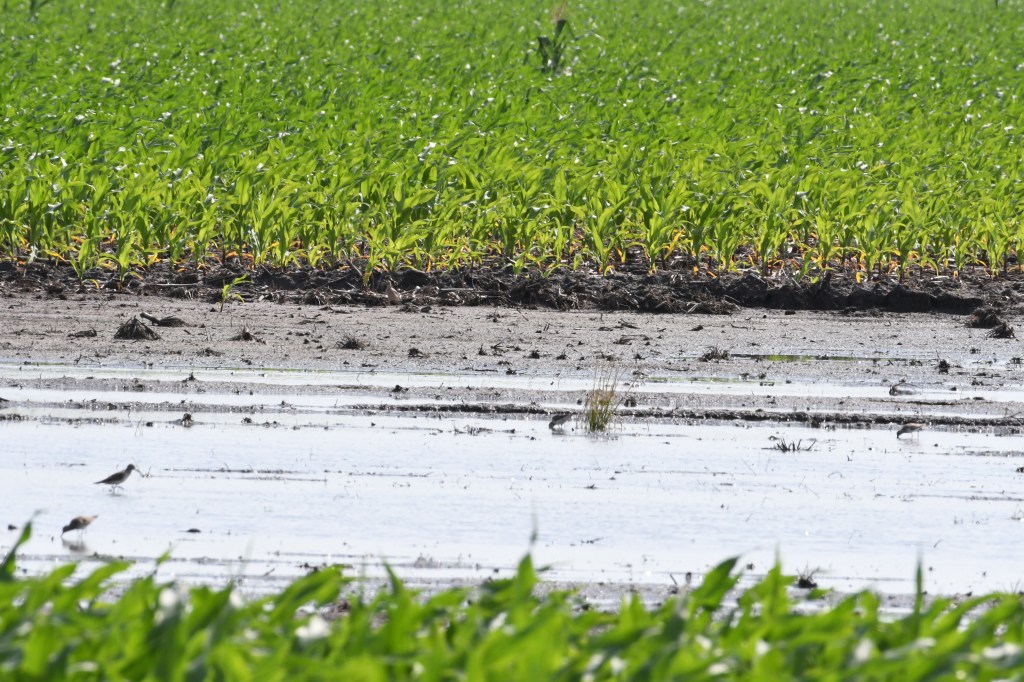
So, they are susceptible to agrochemical exposure. While certain agrochemicals are being phased out in the United States, these chemicals persist in other countries.
Oh right, the title of this post..
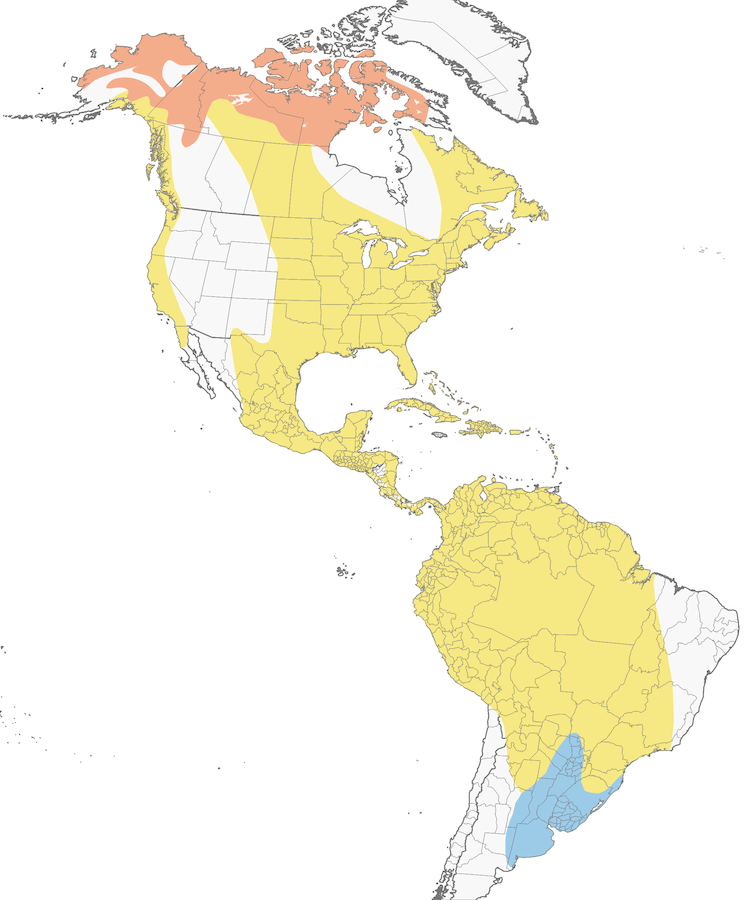
The following is the Buff-breasted Sandpiper range map found at https://birdsoftheworld.org/bow/species/bubsan/cur/habitat
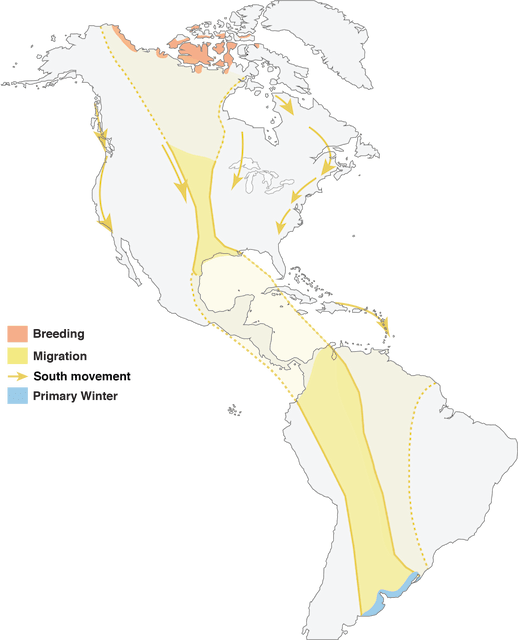
While I listen to what’s left of the “dawn chorus” out the front porch this morning, I ‘m going to stare at this map a bit longer. Why look so far, so hard, in the long ago past and from distant lands, for inspiration and wonder?
Have a good Sunday morning.
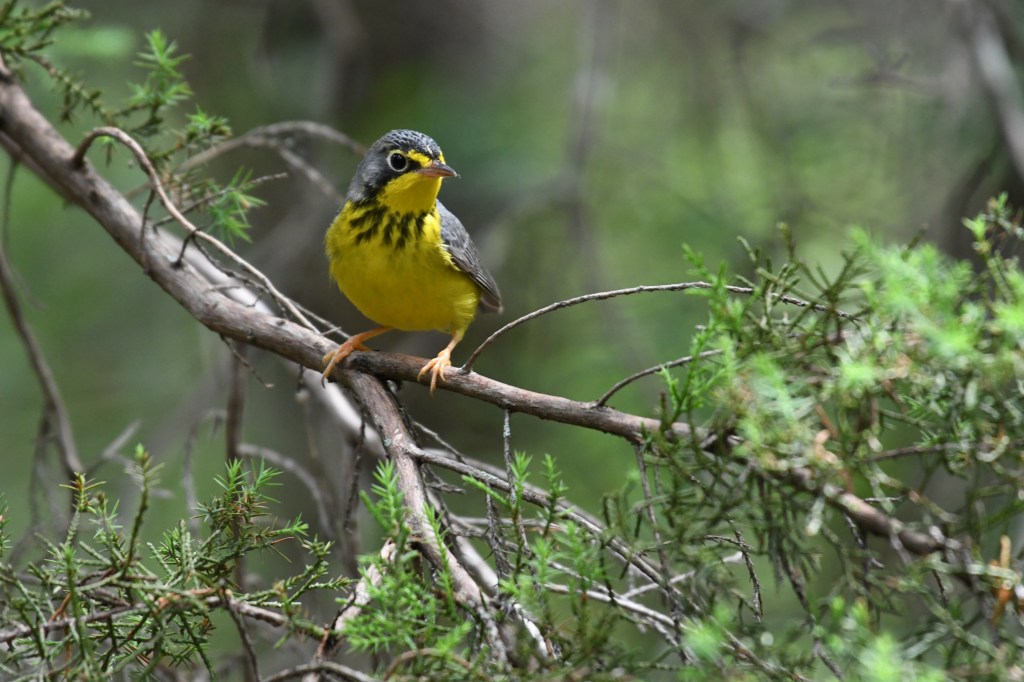
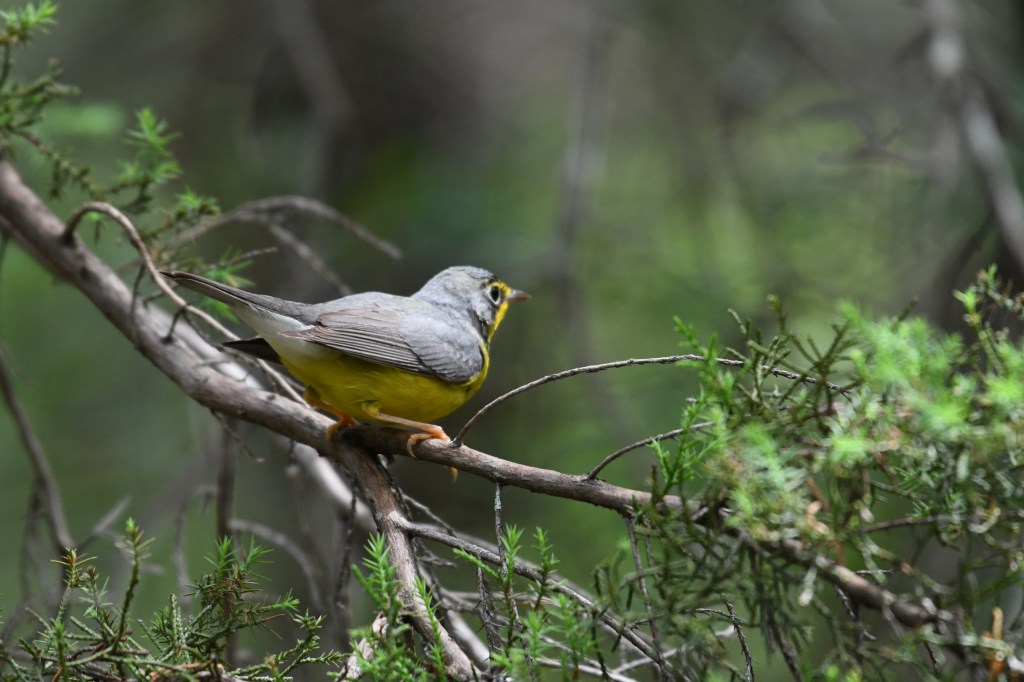
Seeing movement in the juniper, raising binoculars, only to have this guy fill the field of view; it reminds me of reasons I still do this.
At times, I wonder if it is some form manifestation of obsessive-compulsive tendencies. Other times I believe it to be one thing that still makes sense to me in this quickly changing, often degrading, unnecessarily noisy, and disjointed world.
And so I hike. I listen. I see all movement. Most of the time it is branch-leaf-limb-grass-insect-reflection. Infrequently it is bird. Even less so, it is something like this:
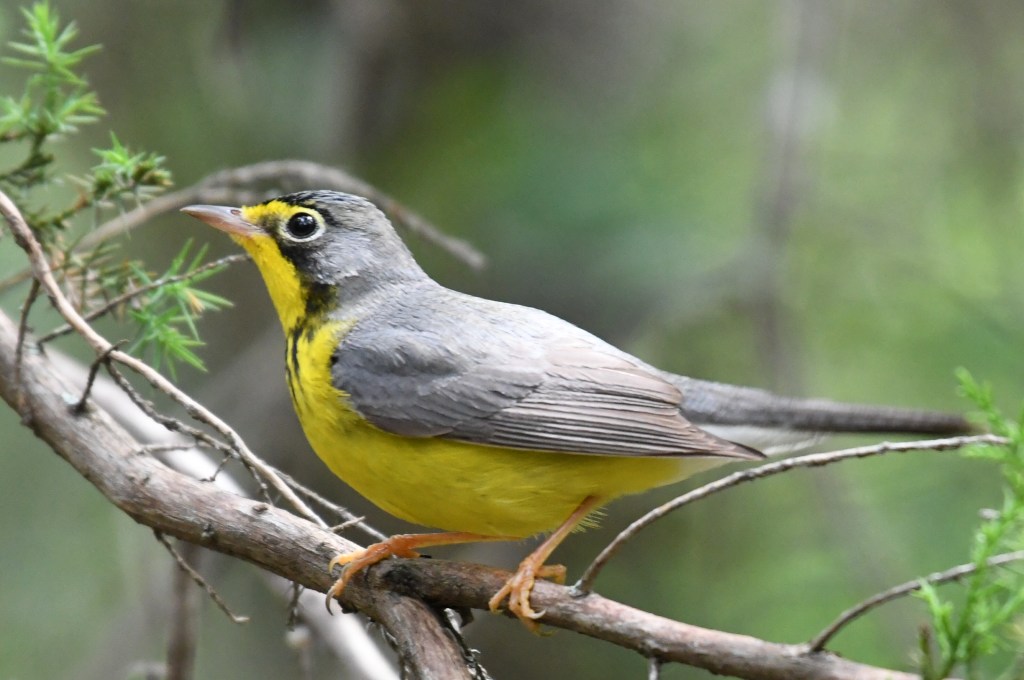
This Canada Warbler was at Carleen Bright Arboretum, a place of work, on a day off.
There are moments I wonder if we even deserve the birds that are still left on this continent. In spite of the obstacles we have put on obstacles already endowed to them by natural forces they continue on. For those for whom they give a chance to notice, and in turn take that chance; it is an absolute privilege to view them on their ancient journey. To pull quick photos such as these, a luxury.
An active sprite of color, with its own very real concerns, crossing paths in an often otherwise graying world.
I look to my youngest nephew. Perhaps “we” haven’t done much lately to deserve birds; but “he”, he does.
What a tough year, and spring. Every year, every spring has been tough for migrating songbirds. Made even more difficult, often unnecessarily so, by we who now happen to find difficulty.
Walk in silence. See.
As I went into work yesterday (I work alone, outside..typically), I was reminded the world moves on. I knew this really; I just saw it all over again. Rain falls, mud is wet, grass grows.
Species of this earth have faced much. They always did, and found a balance, struggled again and balanced reached. Remaining species of this earth have faced much, at the hands of us. Unnatural. Without mutual reason. No time to balance.
In spite of all obstacles combined, avian migration continues; atleast so far as I can tell in this particular hemisphere. In my very locally important existence on this patch of earth, scissor-tailed flycatchers, upland sandpiper, a first buzz-by of a likely black-chinned hummingbird. All the leading edge of migration that continues in spite of the obstacles we have placed in front of it.
This morning, while scoping the mostly fallow, still lowland-moist fields a few miles from here, a few of the broken stub corn straw cobble scrabble patches moved.
Remember how earthworms were an indicator of good soil? Watch the first plover that comes in from the left of frame.
These birds, at the time of this typing, have avoided wind turbines, buildings of reflective glass and otherwise, feral cats, light pollution, etc., to land on this patch of earth not yet concreted over.
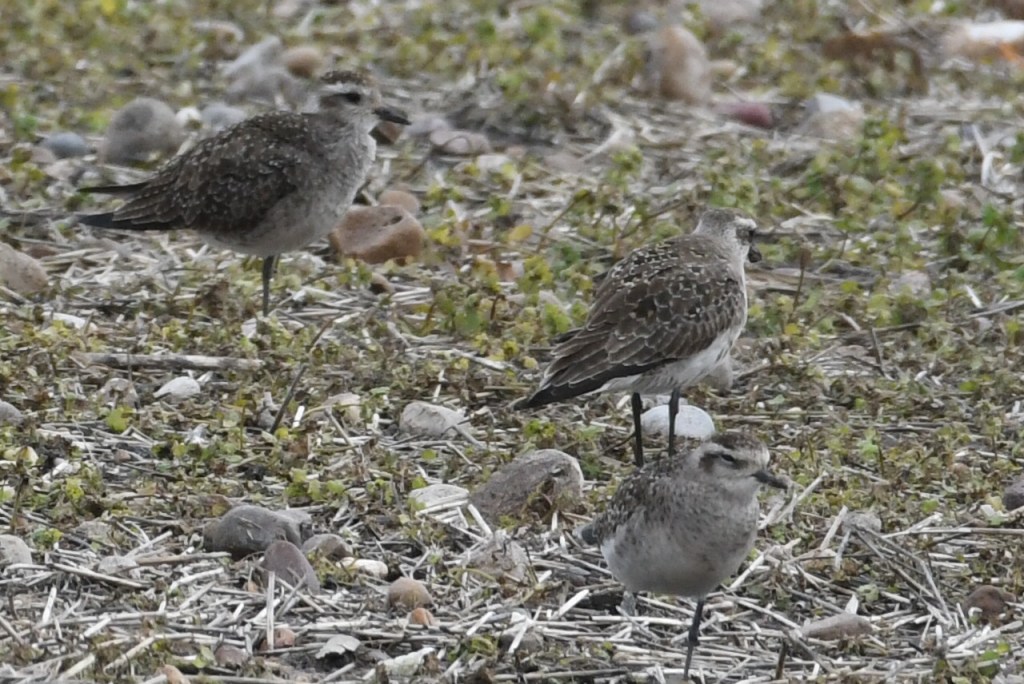
Like many shorebird species, this plover is heading to the top of the continent to nest in the tundra regions of the Northwest Territories, Yukon territory, and Alaska. Some of the coldest places in the winter, are some of the most diverse and rich in the Spring/Summer. Thousands of miles of obstacle-avoidance, energy taken in versus energy expended, yet to go.
Not bad for around 5 ounces per being.
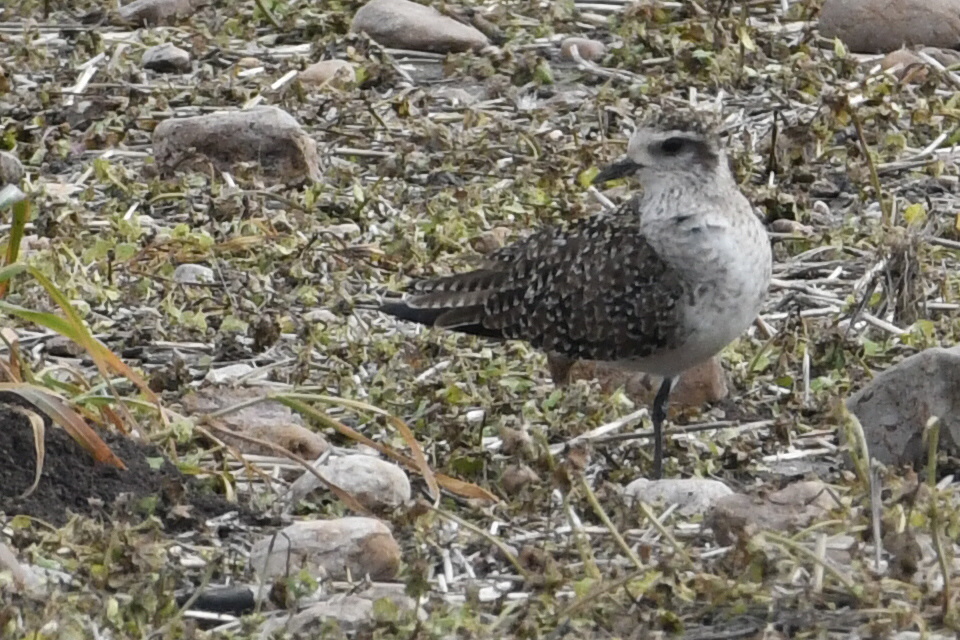
Well north of 5 ounces sitting in this old farmhouse, hammering out some words to the sound of Eastern Meadowlark, among a community-state-country-planet wide member of a species isolating and “self-distancing” and maybe even being humbled (one can hope) as we face… an obstacle.
Pardon the plover, if it continues indifferently on its ancient journey. Maybe when we find ourselves on the other end of this difficult moment, we can try not to add to other’s. Existence is plenty difficult as is. And mutually worthy.
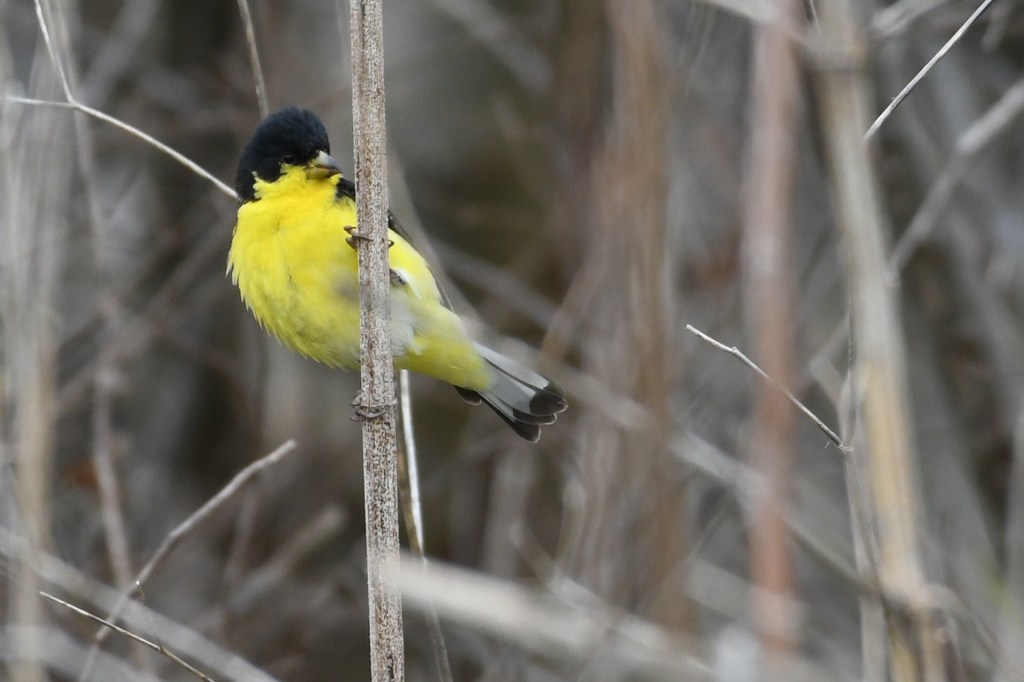
Lesser Goldfinch reminds me of many places. My time and work in South Texas. My time and work in parts of the Hill County of central and south-central Texas. Work, play, Life, in the mountains of the trans-Pecos of Texas. Work and play in the American Southwest. Life, jobs, hardships, and letting go, in the Santa Cruz Mountains of California (though a green-backed western subspecies).
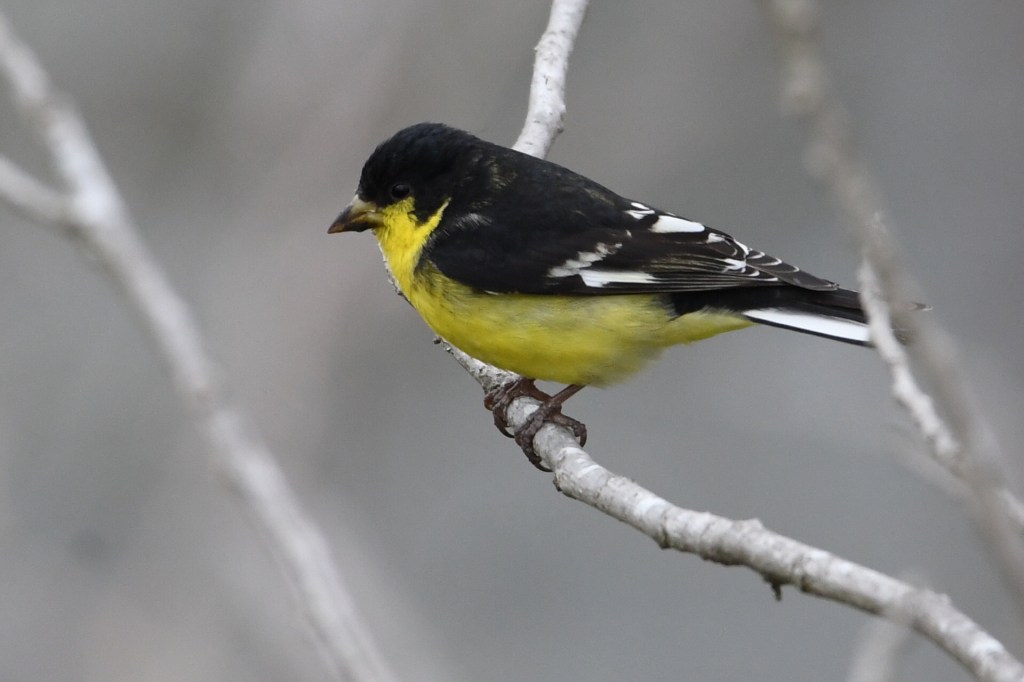
Anywhere but here.
What has been a bit of a personal enigma during my return to this When, and this Where, a common bird to my life in the past has been anything but in the present. I’ve missed on several occasions.
Birds are acting strange. We are all, acting strange.
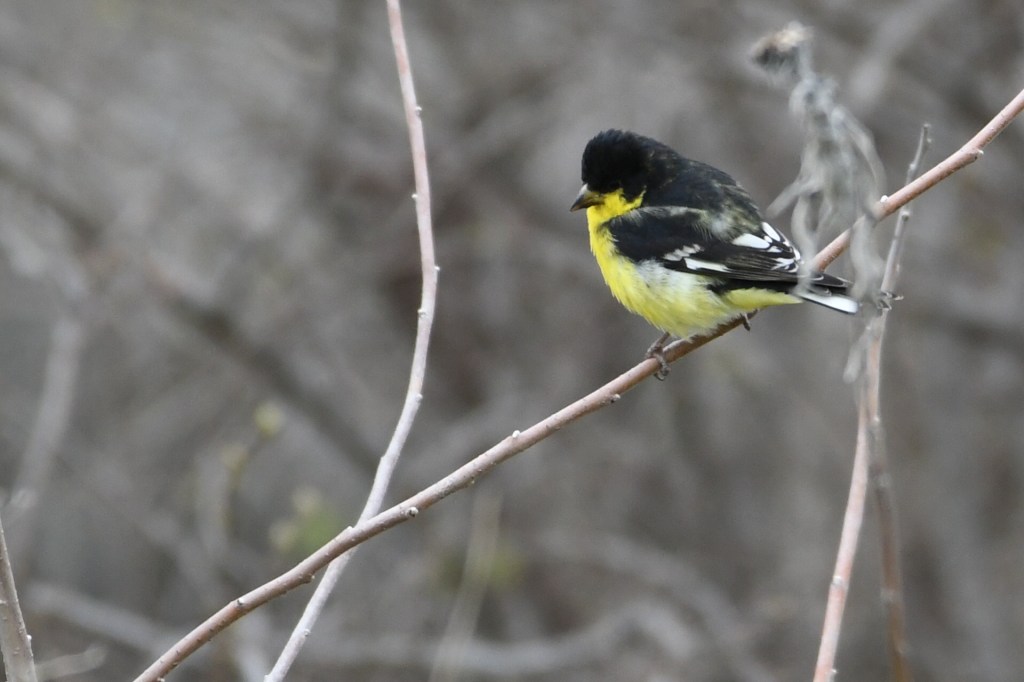
A species that is thought to recede to the south-southwest in the Winter has been sporadically reported in this county these last few months; here, east of its summer nesting range.
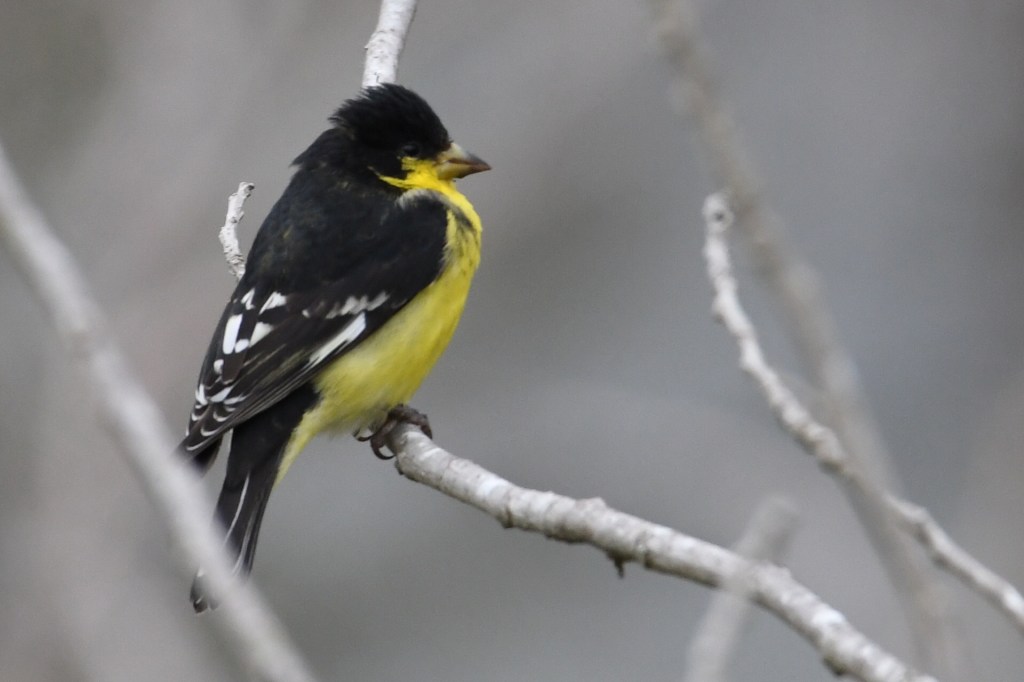
Whatever their reasoning, I am thankful for the color among the dreary. I stand appreciative for the diminutive, soft, plaintive airings in a world that is only getting louder with needless exchanges.
 matthew-york.com