For survival. Twice a calendar year. We are never the only ones.
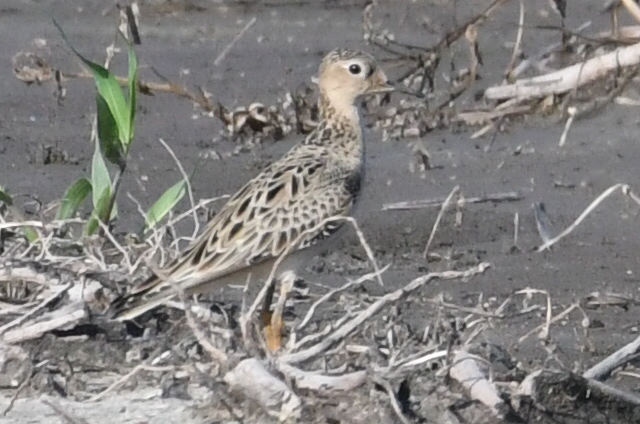
I had the pleasure of scoping a species I don’t get to see too often. They were somewhat distant, and mostly backlit. Birds are not obligated to present us with good photo opportunities. They are not court jesters.
However, on the first of the two days, one of them did fly over the dusty road giving me a moment of sun at my back, though still a bit far away.
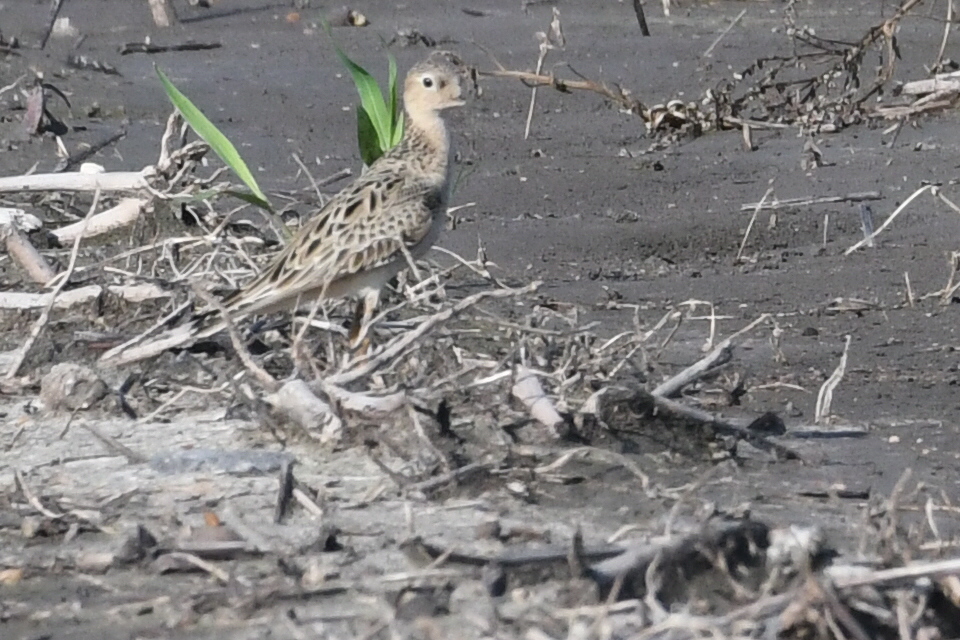
Considered a “Near Threatened” species by the International Union for Conservation of Nature (IUCN), large numbers of Buff-breasted Sandpipers were killed in the late 1800s and early 1900s by commercial hunters in the central United States. The passing of the Migratory Bird Treaty Act (MBTA) of 1918 eventually eliminated market hunting of the species in North America.
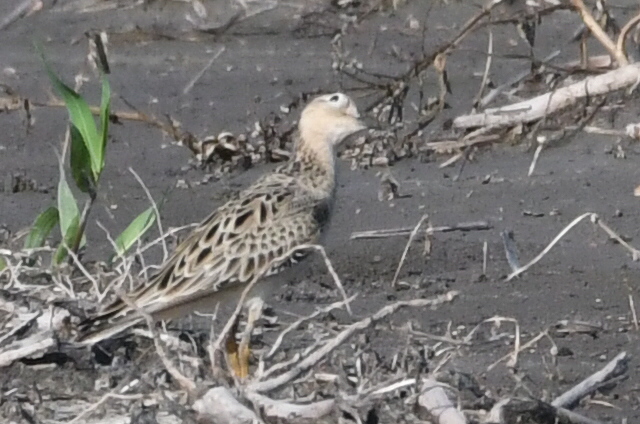
As you can see (maybe) see with these photos, Buff-breasted Sandpipers make extensive use of agricultural fields during migration. They also do so in their over-wintering range in South America. Okay, I will include another photo below:
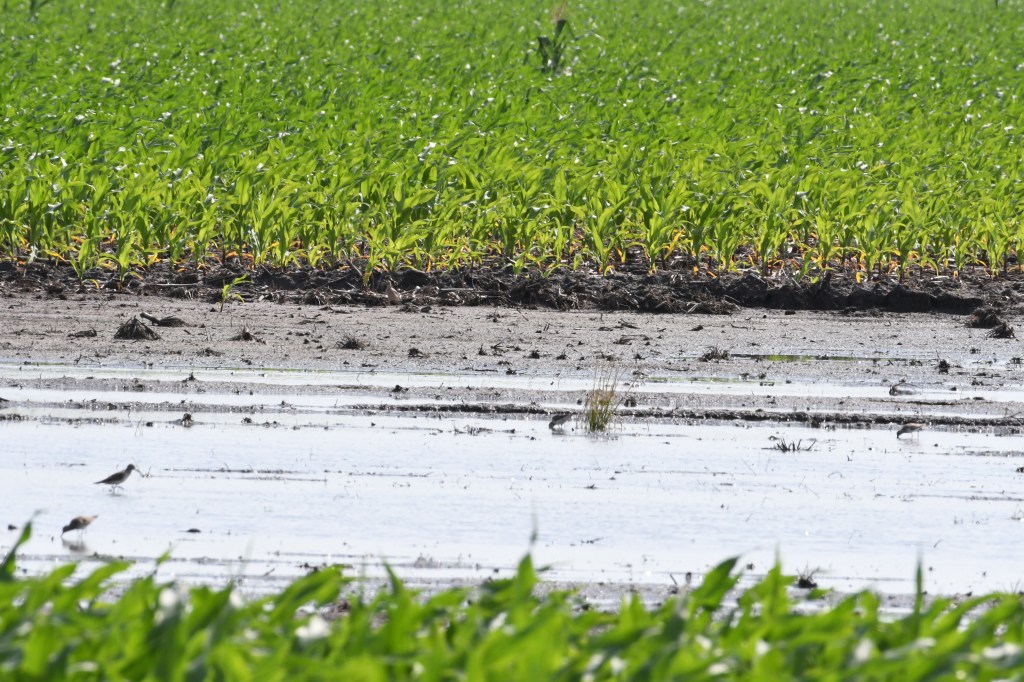
So, they are susceptible to agrochemical exposure. While certain agrochemicals are being phased out in the United States, these chemicals persist in other countries.
Oh right, the title of this post..
The following is the Buff-breasted Sandpiper range map found at https://birdsoftheworld.org/bow/species/bubsan/cur/habitat
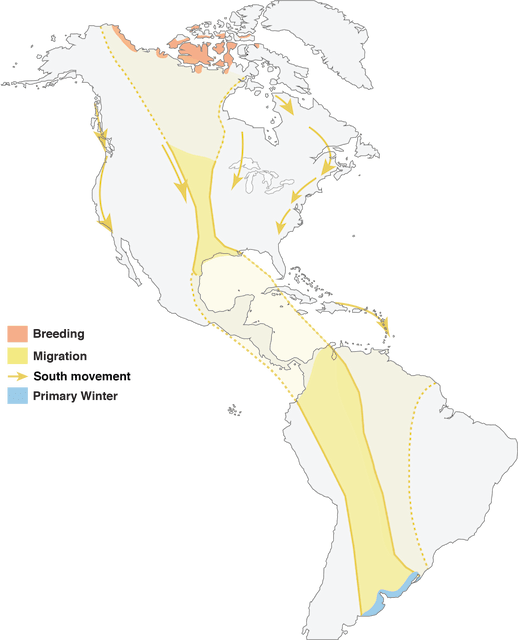
While I listen to what’s left of the “dawn chorus” out the front porch this morning, I ‘m going to stare at this map a bit longer. Why look so far, so hard, in the long ago past and from distant lands, for inspiration and wonder?
Have a good Sunday morning.
 matthew-york.com